‘Silk Road 2.0’ Launches, Promising A Resurrected Black Market For The Dark Web

Forbes

Andy Greenberg

6th November 2013

Screen-Shot-2013-11-06-at-10_35_48-AMThe Silk Road is dead. But the dark web dream lives on.

On Wednesday morning, Silk Road 2.0 came online, promising a new and slightly improved version of the anonymous black market for drugs and other contraband that the Department of Justice shut down just over a month before. Like the old Silk Road, which until its closure served as the Web’s most popular bazaar for anonymous narcotics sales, the new site uses the anonymity tool Tor and the cryptocurrency Bitcoin to protect the identity of its users. As of Wednesday morning, it already sported close to 500 drug listings, ranging from marijuana to ecstasy to cocaine. It’s even being administered by a new manager using the handle the Dread Pirate Roberts, the same pseudonym adopted by the previous owner and manager of the Silk Road, allegedly the 29-year-old Ross Ulbricht arrested by the FBI in San Francisco on October 2nd.

The only significant visible change from the last Silk Road, spotted by the dark-web-focused site AllThingsVice that first published the site’s new url, is a new security feature that allows users to use their PGP encryption key as an extra authentication measure. It also has a new login page, parodying the seizure notice posted by the Department of Justice on the prior Silk Road’s homepage, with the notice “This Hidden Site Has Been Seized” replaced by the sentence “This Hidden Site Has Risen Again.”

“You can never kill the idea of Silk Road,” read the twitter feed of the new Dread Pirate Roberts twenty minutes before the site’s official launch.

The Silk Road sequel experienced some hiccups coming online–it had planned to launch at 4:20pm on November 5th, a significant time and date for an anarchic drug site. But that launch was delayed for 24 hours, and even now the new Silk Road 2.0 isn’t fully operational–its administrators say they’re still gauging the site’s traffic load before they start accepting orders later this week.

When it does resume sales, the new Silk Road may not have an easy time convincing users to resume their black market business as usual. The previous Silk Road is only one of three anonymous black market sites to shut down in the last six weeks. First the administrators of the competing site Atlantis abruptly announced it would be going offline for “security” reasons, absconding with all the bitcoins that users had stored in their Atlantis accounts. Then last week, the Silk Road alternative site Project Black Flag similarly disappeared, and its administrator MettaDPR posted a message on its user forum admitting that he or she had “panicked” and stolen the site’s bitcoins.

A third site, the older Silk Road competitor Black Market Reloaded, also experienced a temporary crisis earlier in October when an administrator leaked the site’s source code onto the web. Black Market Reloaded’s owner known as Backopy initially said he would shut down the site as a result, but then changed his mind when the leak turned out not to expose any obvious vulnerabilities endangering user privacy.

“I for one do not trust the new [Silk Road],” wrote one user on the site’s forums. “I just get an eerie feeling from the whole idea of it, right now i will steer clear…only time will tell, i want to dive head first into it, but i want to see it play out for a little bit before i slap down another 500 bucks, an investment i made the day before [Silk Road] was closed.”

Many more of Silk Road’s users seem reassured, however, by the fact that Silk Road 2.0 is being managed in part by known administrators from the original Silk Road, particularly a moderator known as Libertas who has served as one of the more vocal leaders of the Silk Road community since Ulbricht, the alleged Dread Pirate Roberts, was arrested.

“Silk Road 2.0 will be reborn better, much much more secure as testament to the tenacity and determination of this wonderful community of ours,” wrote one moderator on the new Silk Road’s forum site with the name Synergy. “We will not be down trodden, we will rise again.”

“Into the breach once more my friends!” wrote one Silk Road vendor on the site known as PerfectScans.

Another user with the handle Steve Jobs took the opportunity to offer a eulogy for 29-year-old Ross Ulbricht, the accused previous Dread Pirate Roberts and owner of the original Silk Road, who was arrested last month and has been extradited from Glen Dyer prison in Oakland, California to a jail in New York where he’s scheduled to have a bail hearing this week.

“Within the excitement and morning light glare of a brand new day for all of us…say a kind prayer for Last DPR,” Steve Jobs writes. “Forsaken, fading, atrophying alone in a concrete box cell… who brought us all together here and gave me a home, now he has none.”

Inventor of world wide web criticises NSA over privacy breaches

The Daily Telegraph

06 Nov 2013

Sir Tim Berners-Lee says NSA has weakened online security

Sir Tim Berners-Lee is encouraging governments around the world to release their data to the public

Sir Tim Berners-Lee called for a ‘full and frank public debate’ over internet surveillance

The inventor of the world wide web has criticised America’s National Security Agency and its British counterpart GCHQ for weakening online security by breaking the encryptions that guard data privacy for millions of computer users around the world.

Sir Tim Berners-Lee called for a “full and frank public debate” over internet surveillance, warning that cracking encryption software was foolish and would be exploited by cybercriminals.

“We need powerful agencies to combat criminal activity online – but any powerful agency needs checks and balances and, based on recent revelations, it seems the current system of checks and balances has failed,” he told the Guardian.

“In a totalitarian state where it reckoned it was the only strong state in the world, I can imagine that being a reasonable plan. But in this situation, internet security is hard. It’s naïve to imagine that if you introduce a weakness into a system you will be the only one to use it.”

As well as the dangers of exposing private data to hacker gangs and hostile states, cracking encryptions was also unethical, he said.

“Any democratic country has to take the high road; it has to live by its principles. I’m very sympathetic to attempts to increase security against organised crime, but you have to distinguish yourself from the criminal.”

While he had expected some of the surveillance activities that were revealed by whistleblower Edward Snowden were taking place, he told the paper he was surprised by the scale of the NSA’s reach.

Mr Snowden’s disclosures illustrated a “dysfunctional and unaccountable” failure at the heart of US and UK governments and proved that whistleblowers must be protected from prosecution.

Sir Tim, who is based at the Massachusetts Institute of Technology in Cambridge, Massachusetts, currently serves as the director of the World Wide Web Consortium (W3C) that seeks to improve global standards for the web.

NSA leaks: UK’s enemies are ‘rubbing their hands with glee’, says MI6 chief

The Guardian home

, chief political correspondent

Thursday 7 November 2013 17.28 GMT

Sir John Sawers makes claim in first ever joint public hearing by heads of UK’s three intelligence agencies

A screen grab from the UK's Parliamentar

Sir John Sawers, the head of MI6, speaks at the intelligence and security committee hearing. Photograph: AFP/Getty Images

The head of MI6 has claimed that national security has been so badly damaged by the leaking of NSA files that Britain’s adversaries have been “rubbing their hands with glee” and al-Qaida is “lapping it up”.

But despite the robust language from Sir John Sawers, in the first joint public hearing by the heads of Britain’s three intelligence agencies, there were also signs that some parliamentarians were unaware of the extent of domestic spy agencies’ co-operation with foreign intelligence agencies, such as the relationship GCHQ has with the US National Security Agency.

Sawers warned that the leaks by Edward Snowden had damaged national security by alerting “targets and adversaries” to Britain’s capabilities.

Speaking to MPs and peers on parliament’s intelligence and security committee (ISC), Sawers said: “The leaks from Snowden have been very damaging. They have put our operations at risk. It is clear that our adversaries are rubbing their hands with glee, al-Qaida is lapping it up and national security has suffered as a consequence.”

Sir Malcolm Rifkind, the former Tory foreign secretary who chairs the ISC, immediately challenged Sawers to justify his remarks, but the spy chief did not provide additional details.

“I don’t want to repeat what my colleagues have said,” Sawers replied, in reference to a warning by the director of GCHQ, Sir Iain Lobban, that Britain’s “fragile mosaic of strategic capabilities” was in a weaker position since the first Snowden leaks in June.

The chief of MI6 then added: “They [the other intelligence chiefs] have very clearly set out just how the alerting of targets and adversaries to our capabilities means that it becomes more difficult to acquire the intelligence that this country needs.”

Asked by Rifkind whether he had more hard evidence than that outlined by Lobban, who claimed terrorists had been looking at the media reports and had changed their plans, the GCHQ director intervened over Sawers to say: “Not in this public forum, chairman.”

One member of the committee, Mark Field, voiced concern that the ISC had not been aware of all the “intricacies” in the spy programmes revealed by newspapers such as the Guardian and asked for a comprehensive update of all collaboration with foreign agencies in a closed session, which Lobban agreed to.


Lobban said that the intelligence agencies had embarked on an “active debate” about greater transparency. Asked by Rifkind whether the line between secrecy and openness could be redrawn without endangering the battle against terrorism, the GCHQ head said: “I actually think that has been quite an active debate even before the recent revelations.

“I think when the committee produces your own report – and you seek to produce it in as unredacted a form as possible – clearly with the situation we are in we are actively considering that with government.”

The exchanges between Sawers and Rifkind came after the GCHQ director issued the most detailed account during the ISC hearing of the impact of the Snowden leaks.

Lobban said that the leaking of NSA files, which include documents on the work of GCHQ, would lead to an inexorable darkening of intelligence information about terrorists, organised criminals and paedophiles.

Lobban said: “Sigint [signals intelligence, sources and methods] successes over decades, going back to the second world war and beyond, depend upon our intelligence targets being at best unaware or at best uncertain of our successes. So if you think what happens if Sigint are revealed. It can be a sudden darkening. More often it is gradual but it is inexorable.

“So what we have seen over the last five months is near daily discussion among our targets and I will bring out some, I will give you an example.

“We have seen terrorist groups in the Middle East, in Afghanistan and elsewhere in South Asia discussing the revelations in specific terms – in terms of the communications packages they use, the communications packages they wish to move to.

“We have intelligence on, we have actually seen chat around specific terrorist groups, including closer to home, discussing how to avoid what they now perceive to be vulnerable communications methods or how to select communications which they now perceive not to be exploitable. I am not going to compound the damage by being specific in public. I am very happy to be very, very specific in private.”

Rifkind asked Lobban whether he could state that the changes in methods by terrorists were a direct result of the media reports on the Snowden leaks.

“Absolutely,” he replied. “It is a direct consequence; I can say that explicitly. The cumulative effect of the media coverage, global media coverage, will make the job we have far, far harder for years to come.

“There is a fragile mosaic of strategic capabilities, which allow us to discover, to process, to investigate and then to take action. That uncovers terrorist cells, it reveals people shipping secrets or expertise or materials to do with chemical, biological or nuclear around the world.

“It allows us to reveal the identities of those involved in online sexual exploitation of children. Those people are very active users of encryption and of anonymisation tools. That mosaic is in a far, far weaker place than it was five months ago.”

Earlier in his evidence Lobban admitted that GCHQ collects data from members of the public who are not under any suspicion. But he said that this would never be read or reviewed.

Lobban said: “If you think of the internet as an enormous hayfield, what we are trying to do is collect hay from those parts of the field we can get access to and which might be lucrative in terms of containing the needles or the fragments of the needles that might help our mission.

“When we gather that haystack – and remember it is not a haystack from the home field, it is a haystack from a tiny proportion of that field – we are very, very well aware that within that haystack there is going to be plenty of hay which is innocent communications from innocent people, not just British, foreign people as well.

“So we design our queries against that data to draw out the needles and we do not intrude upon the surrounding hay. And so we can only look at the content of communications where there are very specific legal thresholds and requirements which have been met.

“That is the reality. We don’t want to delve into innocent emails and phone calls. I feel I have to say this. I don’t employ the type of people who would do. My people are motivated by saving the lives of British forces on the battlefield, they are motivated by fighting terrorists and serious criminals. If they were asked to snoop, I wouldn’t have the workforce. They’d leave the building.”

Lobban also gave a guarantee to the former Labour cabinet minister Hazel Blears that neither GCHQ nor the other agencies had acted outside the law.

Mass surveillance: 10 key questions for UK intelligence agency chiefs

The Guardian home

Wednesday 6 November 2013

The directors of GCHQ, MI6 and MI5 are to face questions from a parliamentary committee. Here’s what they should be asked

Sir Malcolm Rifkind

The nine-strong ISC, chaired by Sir Malcolm Rifkind, (pictured) will ask questions on a series of issues, including the mass surveillance programmes revealed by the whistleblower Edward Snowden. Photograph: Ray Tang/Rex Features

The heads of Britain’s three intelligence agencies – whose identities were once regarded as top secret – will on Thursday give evidence before a parliamentary committee for the first time.

Sir Iain Lobban, the director of GCHQ, the MI6 chief, Sir John Sawers, and the director general of MI5, Andrew Parker, will face questions from the intelligence and security committee in a 90-minute session.

It it thought the three chiefs will be asked to make brief opening remarks about the work of the agencies, with a focus on the threat to the UK from al-Qaida networks and their affiliates, as well as “lone wolf” terrorists.

The nine-strong ISC, which is chaired by former foreign secretary Sir Malcolm Rifkind, will then ask questions on a series of issues, including the mass surveillance programmes revealed by the whistleblower Edward Snowden.

Only a handful of officials and journalists have been invited into the room to hear the evidence. The session will also be broadcast on parliament TV – but subject to a two-minute delay because of fears secrets might be inadvertently revealed.

Critics fear the members of the committee will be too deferential. Here are 10 questions they could ask to ensure they are not:

1) Dame Stella Rimington, the former head of MI5, and Sir David Omand, the former director of GCHQ, have said it is time for Britain’s intelligence agencies to be more transparent so the public can have greater confidence in their work.

Do you agree – and if so, how do you intend to achieve this?

2) Former minister Chris Huhne  said the existence of some of GCHQ’s mass surveillance programmes were kept from the cabinet – and from members of the National Security Council. Why weren’t ministers allowed to know about the programmes – particularly when they were relevant to discussions about data retention set out in the so-called snooper’s charter?

3) Privacy campaigners, former cabinet ministers and even a former chair of the ISC, Lord King, have called in recent weeks for the laws that govern Britain’s intelligence agencies to be overhauled .The agencies have argued against any changes. Why? What do the agencies have to fear from having more up-to-date laws?

4) Edward Snowden was one of 850,000  employees and contractors who had access to the secret material he leaked to the Guardian and others. Did the chiefs know that so many people outside the UK had access to British secrets? What has been done to reduce the numbers who can see this material?

5) Last year, 550 analysts (300 British, 250 American) were working on GCHQ’s Tempora programme, which analyses  calls, emails and Google search traffic coming in and out of the UK. How many  are working on Tempora now?

6) Documents seen by the Guardian describe how GCHQ regards the UK’s legal regime as a “unique selling point” to be exploited when collaborating with the US . Why is Britain’s legal framework deemed to be so attractive to the US?

7) The Washington Post revealed this week that GCHQ had ‘hacked’ into Google’s private fibre-optic cables in the UK as part of a joint programme with America’s National Security Agency. Google said this was outrageous. Did GCHQ have legal authority to do this – and if so, which minister signed the relevant “warrant” – and when?

8) The NSA eavesdropped on Angela Merkel’s mobile phone for at least 10 years. Documents also show the NSA targeted the phones of another 35 government heads. Did Britain’s intelligence agencies receive any transcripts of these conversations? Did GCHQ help the NSA tap any of these calls?

9) The agencies insist they seek legal approval for all their major programmes, and that if they want information from other agencies, such as the NSA, they need warrants for that material too. But do they need warrants for information offered or gifted by another agency?

10) The former home secretary David Blunkett said this week the intelligence agencies tend to “get carried away” and their claims need to be treated with a “breath of scepticism”. What do you think he meant? And wouldn’t stronger oversight of the agencies be better in the long run?

Obama Secret Service Agent: “It’s Worse Than People Know… and I’m Not Trying to Scare You Either”

SHTFplan.com

Mac Slavo

November 6, 2013

You may have your suspicions about what’s going on behind closed doors at the White House.

But according to one of President Obama’s former body guards it’s much worse than we can even imagine.

Dan Bongino has protected numerous Presidents over his career, including President Obama. He has been within ear-shot of many a discussion in the Oval Office, but up until this administration has stayed out of the lime light. Apparently, however, the activities of this administration are so abhorrent that he could no longer keep quiet.

Bongino is so upset with what he witnessed that he is now running for Congress because he feels it’s the only way to take America back from the sycophants who have made every effort to enrich themselves with money and power at the expense of the American people.

How bad is it?

We’re in a lot of trouble.

The President sees government – and I think it’s because of his lack of experience and maybe community organizing in the past – as this shiny new toy.

For all the disagreements I had with Clinton, Carter and Bush there were always limits… there was that line you just didn’t cross… We cross it seemingly every day. We’re lost in the scandals…

The Jamie Dimon shakedown at Chase… the HHS scandal.. Kathleen Sebelius shaking down the health care industry for money… the IRS… it’s to the point where these scandals in and of themselves would be huge back-breaking scandals [but] are just lost in the scandal fog of this administration…

It’s worse than people know… and I’m not trying to scare you either.

This is coming from someone who has stood next to Presidents for his entire career.

The implications are absolutely terrifying, especially considering how bad the publicly known scandals already are. Can you imagine what’s happening outside the view of Americans?

This is not about Republican or Democrat, it’s about liberty, pure and simple, and this administration has done more to damage our individual rights than any that has come before it.

Bongino expresses this succinctly when discussing the NSA scandal and the administration’s use of the information acquired by government snoops all over the country.

You give the government information and it will be abused. It is not a matter of if it’ll be abused, it’s only a matter of when…

When the line between the personal self and the public self… when that line is determined by the government that keeps your information in a trove for release any time they need it, how are you free?

..the bottom line is, having worked inside the government, it will be abused. It is only a matter of time.

We are all doing something wrong. The catch is not “if” we’re doing something wrong. It is “are your private wrongs impacting on my civil liberties?” If not, the government has no business in your life… it’s a red herring…

If you’re not doing something wrong? The question is only whether your private wrongs that have no effect on anyone else become exposed for the government’s benefit.

…It’s only a matter of time before someone slaps an email on your desk from fifteen years ago… and says ‘look what we got against you.’

Remember, when the key is held by someone else liberty means absolutely nothing. That personal and private self are being evaporated.

Make no mistake. They – and that especially includes this administration and/or agents acting under their directives and initiatives – will use everything they can against you when it suits them.

The prerogative has always been to destroy anything or anyone who threatens the establishment. We’ve seen it time and again with this, as well as past, White House administrations and Congressional membership.

Now, more than ever before, they will start targeting those who speak out against them and jeopardize their agenda.

***Screen Shot 2013-11-06 at 10.54.16 AM

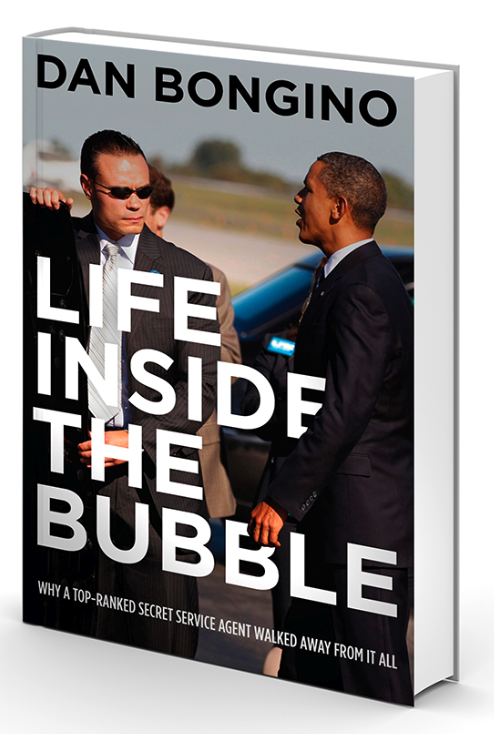
Ex-Secret Service agent Dan Bongino quit after witnessing first-hand the horrors inside the bubble of the Obama administration, where the president is comfortably excluded from the effects of his poor policies. Check out his upcoming book “Life Inside the Bubble: Why a Top-Ranked Secret Service Agent Walked Away from It All” available on Amazon.

Also, check out Alex Jones’ interview with Mr. Bongino where he shared his views on how politicians in both political parties have become so corrupt, that any focus on prescriptive policies for a better tomorrow have been lost.


Life when the Jobcentre says you broke the rules

BBC News

By Sean Clare

6 November 2013

People queuing outside a job centre


Almost 400,000 people have lost their Jobseeker’s allowance since sanctions for claimants were toughened last year. But are the new rules hurting those they are supposed to be helping?

Peter Jones avoided a serious brain injury when he fell at work in November last year. But while he escaped with his health, his good fortune ended there – he was told not to come back to work and went to sign on.

This was a month after new rules for those out of work were introduced and he was about to find out all about them.

“I’d worked all my life,” he says. “But they treated me as if I was cheating the system from day one. They didn’t even know me.”

Anyone claiming Jobseeker’s allowance (JSA) can be sanctioned for things such as missing a meeting with an adviser, not turning up to training or not being available for work.

“If they do everything that’s expected of them, they won’t get sanctioned,” a spokesman at the Department for Work and Pensions (DWP) says.

Peter, who says he was applying for “five to six jobs a day”, felt this was just what he was doing.

Designed to help

He had moved from Llandudno to be near his seriously ill mother in Stafford who was in and out of hospital with brain tumours.

But when he wanted to move back to Wales and look for work there, he says job centre officials 100 miles away in Stafford deemed this an “inappropriate search”.

He was sanctioned and did not have any income for the whole of December. He got into debt and, aged 30, moved back in with his parents.

“I didn’t know what to do or how to get out of it,” he says.

When he moved and signed on in Wales, he was sanctioned again for not attending a meeting with an adviser back in Stafford.

Peter Jones
Peter Jones says he had problems soon after losing his job last year

The new regulations – which mean a minimum four-weeks without JSA for anyone deemed to have breached them – are designed to help those without a job, according to the DWP.

“This is absolutely not about saving money or punishing people,” the spokesman says. “Our role is to help people into work.”

Peter found a job as soon as he returned to Wales but, because of the sanctions, he had only received two JSA payments in the three months he was out of work.

“I’m scared of ever being in that situation again,” he says.

And, according to the Citizens Advice Bureau (CAB), he is not alone.

Extra obstacle

It says advice centres have seen a 64% increase in the number of people coming to them after being sanctioned.

Invariably, the CAB says, they are desperate to get back into work.

So is the new system doing what it is supposed to – helping those who want to work to do so?

Not according to the CAB’s chief executive Gillian Guy.

“When you’re already struggling to make ends meet whilst looking for work, a sanction can end up making it harder to put food on the table and adds an extra obstacle to the huge challenge of getting a job.”

She adds: “The regime is not only self-defeating, it is also poorly administered.”

For Lee Offield, 29, a 10-week sanction meant he had to turn to food banks.

He had wanted to use his illustration degree to work in art therapy.

After a year out of work he started a basic social care course in Bristol but had to leave half way through after his JSA was withdrawn.

He was told he could not be spending enough time looking for work if he was doing a college course.

Foodbank use
The Trussell Trust says more people are coming to food banks because their benefits have been stopped

Having now moved back to his home town in Devon he says the experience left with him with temporary, insecure and seasonal work instead of the social care job he had hoped for.

He appealed against his sanction, won and was repaid most of the money he had been docked.

While he admits he is still in debt, the money is not his overriding concern.

“I could’ve had a career if I’d been able to continue the course,” he says. “But now I don’t.”

Staff pressure

The union representing the frontline staff who make these sometimes life-changing decisions alleges that, since the toughening of the rules, there is an expectation they should come down hard on claimants.

“There’s no question that there is an overarching pressure to enforce the sanctions regime as strictly as possible,” says the PCS’s Charles Law.

It’s an accusation the DWP flatly denies.

But the union claims ministers’ desire to get tough has led to job centre managers pushing advisers to issue sanctions.

The PCS claims there are “sanctions league tables” and that staff face the first step of a disciplinary procedure if they fail to withdraw JSA from enough claimants.

The DWP insists there are no such targets and that staff want people to do all they can to find work.

Iain Duncan Smith
Work and Pensions Secretary Iain Duncan Smith says the priority is to get people back to work

Jamie Allen, 23, was made redundant over the summer, losing his job installing computer systems for an IT firm.

His parents – one disabled and the other her full-time carer – took out a high-interest payday loan to support him after he was sanctioned for missing a session at the job centre.

He says he received a text telling him his adviser was ill and not to come in until his next scheduled session – which he did the following week.

A month later, a letter informed him he would not receive any JSA for four weeks because he had missed a session on the afternoon his adviser had been ill.

Last resort

His mother Alyson says the text could have been misinterpreted, but that he was doing everything possible to find work – travelling for an hour to and from the nearest job centre, sometimes for two meetings a day, and applying for 128 jobs.

Sanctions for JSA claimants

Job centre

  • Failure to comply with the most basic job-seeking requirements – 13 weeks to three years
  • Failure to be available for work – Up to 13 weeks
  • Failure to attend/participate in an adviser interview/training scheme – four to 13 weeks

Source: http://www.gov.uk

But their appeals were met with curt responses.

“We were treated as if we were nothing,” Alyson says. “I know getting the loan was silly but he had no money for bus fares so couldn’t get to the job centre.”

A DWP spokesman said the department could not comment on individual cases but said in a statement: “It’s only right that people claiming benefits should do everything they can to find work if they are able.

“The rules regarding someone’s entitlement to Jobseeker’s allowance – and what could happen to their benefits if they don’t stick to those rules – are made very clear at the start of their claim.

“We will provide jobseekers with the help and support they need to find a job, but it is only fair that in return they live up to their part of the contract.

“Sanctions are used as a last resort and anyone who disagrees with a decision can appeal.”

No place for Sharia law in Russia – senior MP

Written by RT News

Published time: November 06, 2013

sharia-law-russia-protest_siThe head of the State Duma’s Constitutional Legislation Committee has blasted as “extremely dangerous” the suggestion to regulate some relations in certain regions by adhering to the norms of Sharia law.

We cannot leave an excessively large space of unregulated  relations because when we do, other regulators start to fill that  space in, and these other regulators are extremely  dangerous,” MP Vladimir Pligin (United Russia) told a  parliamentary expert council on Wednesday, according to Interfax  news agency.

Even if we discuss territories which have a certain  mentality, it is not possible to let even a part of legal  relations be regulated by Sharia law. This space must be  regulated by Russian law and there is no doubt about it,” he  said.

Despite the fact that several regions in the South and Central  Russia are predominantly Muslim, calls to bring secular laws into  line with religious ones are extremely rare. One such occasion,  followed by a nationwide controversy, took place in April 2012  when Dagestani lawyer Dagir Khasavov called for the introduction  of Sharia courts in an interview with the Russian channel REN-TV,  threatening that if they weren’t Russia would “drown in  blood.”

Russian politicians, senior Muslim clerics and ordinary citizens  were outraged by this statement. The Moscow bar association  threatened to expel Khasavov and the Prosecutor General’s Office  started a criminal case over suspected incitement of religious  hatred.

However, shortly before the legal action Khasavov fled the  country. A few months later the case was closed due to inability  to establish that a crime had been committed.

The lawyer himself said in press comments that his words were  taken out of context, that the interview was badly and  purposefully cut to achieve maximum notoriety. He threatened to  sue the TV channel that aired the program, though he has not yet  fulfilled this threat.

Big Brother’s Loyal Sister: How Dianne Feinstein Is Betraying Civil Liberties

CommonDreams.org

by  Norman Solomon

Published on Wednesday, November 6, 2013

16_siFeinstein’s powerful service to Big Brother, reaching new heights in recent months, is just getting started. She’s hard at work to muddy all the waters of public discourse she can — striving to protect the NSA from real legislative remedies while serving as a key political enabler for President Obama’s shameless abuse of the First, Fourth and Fifth Amendments.

Last Sunday, on CBS, when Feinstein told “Face the Nation” viewers that Edward Snowden has done “enormous disservice to our country,” it was one of her more restrained smears. In June, when Snowden first went public as a whistleblower, Feinstein quickly declared that he had committed “an act of treason.” Since then, she has refused to tone down the claim. “I stand by it,” she told The Hill on Oct. 29.

Days ago, taking it from the top of the NSA’s main talking points, Feinstein led off a San Francisco Chronicle op-ed piece with 9/11 fear-mongering. “The Sept. 11, 2001, attack on the United States was highly organized and sophisticated and designed to strike at the heart of the American economy and government,” she wrote, and quickly added: “We know that terrorists remain determined to kill Americans and our allies.”

From there, Senator Feinstein praised the NSA’s “call-records program” and then insisted: “This is not a surveillance program.” (Paging Mr. Orwell.)

Feinstein’s essay — touting her new bill, the “FISA Improvements Act,” which she just pushed through the Senate Intelligence Committee — claimed that the legislation will “bridge the gap between preventing terrorism and protecting civil liberties.” But as Electronic Frontier Foundation activist Trevor Timm writes, the bill actually “codifies some of the NSA’s worst practices, would be a huge setback for everyone’s privacy, and it would permanently entrench the NSA’s collection of every phone record held by U.S. telecoms.”

California’s senior senator is good at tactical maneuvers that blow media smoke. In late October — while continuing to defend the NSA’s planetary dragnet on emails and phone calls — Feinstein voiced concern “that certain surveillance activities have been in effect for more than a decade and that the Senate Intelligence Committee wasn’t satisfactorily informed.” Spinning the myth that congressional oversight of the NSA really exists, she added: “Therefore, our oversight needs to be strengthened and increased.”

As usual, Feinstein’s verbal gymnastics were in sync with choreography from the Obama White House. The “certain surveillance activities” that she has begun to criticize are the NSA’s efforts targeting the phones of German Chancellor Angela Merkel and other allied foreign leaders. Feinstein mildly chided Obama for ostensibly not being aware of the eavesdropping on Merkel’s cell phone (“That is a big problem”), but she was merely snipping at a few threads of the NSA’s vast global spying — while, like the administration as a whole, reaffirming support for the vast fabric of the agency’s surveillance programs.

Ever since the first big revelations about the National Security Agency five months ago, Dianne Feinstein has been in overdrive to defend the surveillance state. As chair of the Senate Intelligence Committee, she generates an abundance of fog, weasel words, anti-whistleblower slander and bogus notions of reform — while methodically stabbing civil liberties in the back.

The White House is now signaling policy changes in response to the uproar about monitoring Merkel’s phone, the New York Times reported on Nov. 5, but “President Obama and his top advisers have concluded that there is no workable alternative to the bulk collection of huge quantities of ‘metadata,’ including records of all telephone calls made inside the United States.” Feinstein is on the same page: eager to fine tune and continue mass surveillance.

With fanfare that foreshadows a drawn-out onslaught of hype, Feinstein has announced that the Senate Intelligence Committee will hold hearings on NSA surveillance. “Her committee is now making preparations for a major investigative undertaking, which is expected to take at least several months,” the Wall Street Journal reports. When the show is over, “The report that results from the probe will be classified.”

With Dianne Feinstein’s hand on the gavel, you can expect plenty of fake inquiries to pantomime actual oversight. She has shown a clear commitment to deep-sixing vital information about the surveillance state, in a never-ending quest for the uninformed consent of the governed. “From out of the gate, we know that her entire approach is to make those hearings into a tragic farce,” I said during an interview on C-SPAN Radio last week. “Her entire approach to this issue has been to do damage control for the NSA…. She is an apologist and a flack for the surveillance state, she is aligned with the Obama White House with that agenda, and we at the grassroots must push back against that kind of a politics.”

We Deserve More From Our Democratic System

CommonDreams.org

by  Russell Brand for The Guardian/UK

Published on Wednesday, November 6, 2013

Russell Brand doesn’t think a revolution is coming… he knows it. ‘I ain’t got a flicker of doubt. This is the end—it’s time to wake up.’ (Screenshot: BBC)I’ve had an incredible week since I spoke from the heart, some would say via my arse, on Paxman. I’ve had slaps on the back, fist bumps, cheers and hugs while out and about, cock-eyed offers of political power from well intentioned chancers and some good ol’ fashioned character assassinations in the papers.

The people who liked the interview said it was because I’d articulated what they were thinking. I recognise this. God knows I’d love to think the attention was about me but I said nothing new or original, it was the expression of the knowledge that democracy is irrelevant that resonated. As long as the priorities of those in government remain the interests of big business, rather than the people they were elected to serve, the impact of voting is negligible and it is our responsibility to be more active if we want real change.

“A system that serves the planet and the people — I’d vote for that,” says Brand.

Turns out that among the disenchanted is Paxman himself who spends most of his time at the meek heart of the political establishment and can’t summons up the self-delusion to drag his nib across the ballot box. He, more than any of us is aware that politicians are frauds. I’ve not spent too much time around them, only on the telly, it’s not pleasant; once you’ve been on Question Time and seen Boris simpering under a make-up brush it’s difficult to be enthusiastic about politics.

The only reason to vote is if the vote represents power or change. I don’t think it does. I fervently believe that we deserve more from our democratic system than the few derisory tit-bits tossed from the carousel of the mighty, when they hop a few inches left or right. The lazily duplicitous servants of The City expect us to gratefully participate in what amounts to little more than a political hokey cokey where every four years we get to choose what colour tie the liar who leads us wears.

I remember the election and Cameron didn’t even get properly voted in, he became prime minister by default when he teamed up with Clegg. Clegg who immediately reneged (Renegy-Cleggy?) on his flagship pledge to end tuition fees at the first whiff of power.

When students, perhaps students who had voted for him, rioted they were condemned. People riot when dialogue fails, when they feel unrepresented and bored by the illusion, bilious with the piped in toxic belch wafted into their homes by the media.

The reason these coalitions are so easily achieved is that the distinctions between the parties are insignificant. My friend went to a posh “do” in the country where David Cameron, a man whose face resembles a little painted egg, was in attendance. Also present were members of the opposition and former prime minister Tony Blair. Whatever party they claim to represent in the day, at night they show their true colours and all go to the same party.

Obviously there has been some criticism of my outburst, I’ve not been universally applauded as a cross between Jack Sparrow and Spartacus (which is what I’m going for) but they’ve been oddly personal and I think irrelevant to the argument. I try not to read about myself as the mean stuff is hurtful and the good stuff hard to believe, but my mates always give me the gist of what’s going on, the bastards. Some people say I’m a hypocrite because I’ve got money now. When I was poor and I complained about inequality people said I was bitter, now I’m rich and I complain about inequality they say I’m a hypocrite. I’m beginning to think they just don’t want inequality on the agenda because it is a real problem that needs to be addressed.

It’s easy to attack me, I’m a right twerp, I’m a junkie and a cheeky monkey, I accept it, but that doesn’t detract from the incontrovertible fact that we are living in a time of huge economic disparity and confronting ecological disaster. This disparity has always been, in cultures since expired, a warning sign of end of days. In Rome, Egypt and Easter Island the incubated ruling elites, who had forgotten that we are one interconnected people, destroyed their societies by not sharing. That is what’s happening now, regardless of what you think of my hair or me using long words, the facts are the facts and the problem is the problem. Don’t be distracted. I think these columnist fellas who give me aggro for not devising a solution or for using long words are just being territorial. When they say “long words” they mean “their words” like I’m a monkey who got in their Mum’s dressing up box or a hooligan in policeman’s helmet.

As I said to Paxman at the time “I can’t conjure up a global Utopia right now in this hotel room”. Obviously that’s not my job and it doesn’t need to be, we have brilliant thinkers and organisations and no one needs to cook up an egalitarian Shangri-La on their todd; we can all do it together.

I like Jeremy Paxman, incidentally. I think he’s a decent bloke but like a lot of people who work deep within the system it’s hard for him to countenance ideas from outside the narrowly prescribed trench of contemporary democracy. Most of the people who criticized me have a vested interest in the maintenance of the system. They say the system works. What they mean is “the system works for me”.

The less privileged among us are already living in the apocalypse, the thousands of street sleepers in our country, the refugees and the exploited underclass across our planet daily confront what we would regard as the end of the world. No money, no home, no friends, no support, no hand of friendship reaching out, just acculturated and inculcated condemnation.

The less privileged among us are already living in the apocalypse, the thousands of street sleepers in our country, the refugees and the exploited underclass across our planet daily confront what we would regard as the end of the world.

When I first got a few quid it was like an anaesthetic that made me forget what was important but now I’ve woken up. I can’t deny that I’ve done a lot of daft things while I was under the capitalist fugue, some silly telly, soppy scandals, movies better left unmade. I’ve also become rich. I don’t hate rich people; Che Guevara was a rich person. I don’t hate anyone, I judge no one, that’s not my job, I’m a comedian and my job is to say whatever I like to whoever I want if I’m prepared to take the consequences. Well I am.

My favourite experiences since Paxman-nacht are both examples of the dialogue it sparked. Firstly my friend’s 15-year-old son wrote an essay for his politics class after he read my New Statesman piece. He didn’t agree with everything I said, he prefers the idea of spoiling ballots to not voting “to show we do care” maybe he’s right, I don’t know. The reason not voting could be effective is that if we starve them of our consent we could force them to acknowledge that they operate on behalf of The City and Wall Street; that the financing of political parties and lobbying is where the true influence lies; not in the ballot box. However, this 15-year-old is quite smart and it’s quite possible that my opinions are a result of decades of drug abuse.

I’m on tour so I’ve been with thousands of people every night (not like in the old days, I’m a changed man) this is why I’m aware of how much impact the Newsnight interview had. Not everyone I chat to agrees with me but their beliefs are a lot closer to mine than the broadsheets, and it’s their job to be serious. One thing I’ve learned and was surprised by is that I may suffer from the ol’ sexism. I can only assume I have an unaddressed cultural hangover, like my adorable Nan who had a heart that shone like a pearl but was, let’s face it, a bit racist. I don’t want to be a sexist so I’m trying my best to check meself before I wreck meself. The problem may resolve itself as I’m in a loving relationship with a benevolent dictator and have entirely relinquished personal autonomy.

Whilst travelling between gigs I had my second notable encounter. One night late at the Watford Gap I got chatting to a couple of squaddies, one Para, one Marine, we talked a bit about family and politics, I invited them to a show. Then we were joined by three Muslim women, all hijabbed up. For a few perfect minutes in the strip lit inertia of this place, that was nowhere in particular but uniquely Britain, I felt how plausible and beautiful The Revolution could be. We just chatted.

Between three sets of different people; first generation Muslims, servicemen and the privileged elite that they serve (that would be me) effortless cooperation occurred. Here we were free from the divisive rule that tears us apart. That sends brave men and women to foreign lands to fight their capitalist wars, that intimidates and unsettles people whose faith and culture superficially distinguishes them, that tells the comfortable “hush now” you have your trinkets. It seemed ridiculous that refracted through the power prism that blinds us; the soldiers could be invading the homeland of these women’s forefathers in order to augment my luxurious stupour. Here in the gap we were together. Our differences irrelevant. With no one to impose separation we are united.

I realised then that our treasured concepts of tribe and nation are not valued by those who govern except when it is to divide us from each other. They don’t believe in Britain or America they believe in the dollar and the pound. These are deep and entrenchedsystemic wrongs that are unaddressed by party politics.

The symptoms of these wrongs are obvious, global and painful. Drone strikes on the innocent, a festering investment for future conflict.

How many combatants are created each time an innocent person in a faraway land is silently ironed out from an Arizona call centre? The reality is we have more in common with the people we’re bombing than the people we’re bombing them for.

NSA spying, how far-reaching is the issue of surveillance? Do you think we don’t have our own cute, quaint British version? Does it matter if the dominant paradigm of Western Capitalism is indifferent to our Bud Flanagan belief in nation? Can we really believe these problems can be altered within the system that created them? That depends on them? The system that we are invited to vote for? Of course not, that’s why I won’t vote. That’s why I support the growing revolution.

We can all contribute ideas as to how to change our world; schoolboys, squaddies, hippies, Muslims, Jews and if what I’m describing is naive then you can keep your education and your indoctrination because loving our planet and each other is a duty, a beautiful obligation. While chatting to people this week I heard some interesting ideas, here are a couple.

We could use the money accumulated by those who have too much, not normal people with a couple of cars, giant corporations, to fund a fairer society.

The US government gave a trillion dollars to bail out the big five banks over the past year. Banks that have grown by 30% since the crisis and are experiencing record profits and giving their execs record bonuses. How about, hang on to your hats because here comes a naïve suggestion, don’t give them that money, use it to create one million jobs at fifty grand a year for people who teach, nurse or protect.

These bailouts for elites over services for the many are institutionalised within the system, no party proposes changing it. American people that voted, voted for it. I’m not voting for that.

That’s one suggestion for the Americans; we started their country so we owe them a favour now things are getting heavy.

Here’s one for blighty; Philip Green, the bloke who owns Top Shop didn’t pay any income tax on a £1.2bn dividend in 2005. None. Unless he paid himself a salary that year, in addition to the £1.2bn dividend, the largest in corporate history, then the people who clean Top Shop paid more income tax than he did. That’s for two reasons – firstly because he said that all of his £1.2bn earnings belong to his missus, who was registered in Monaco and secondly because he’s an arsehole. The money he’s nicked through legal loopholes would pay the annual salary for 20,000 NHS nurses. It’s not illegal; it’s systemic, British people who voted, voted for it. I’m not voting for that.

Why don’t you try not paying taxes and see how quickly a lump of bird gets thrown in your face. It’s socialism for corporate elites and feudalism for the rest of us. Those suggestions did not come from me; no the mind that gave the planet Booky Wook and Ponderland didn’t just add an economically viable wealth distribution system to the laudable list of accolades, to place next to my Shagger Of The Year awards.

The first came from Dave DeGraw, the second Johann Hari got from UK Uncut. Luckily with organisations like them, Occupy, Anonymous and The People’s Assembly I don’t need to come with ideas, we can all participate. I’m happy to be a part of the conversation, if more young people are talking about fracking instead of twerking we’re heading in the right direction. The people that govern us don’t want an active population who are politically engaged, they want passive consumers distracted by the spectacle of which I accept I am a part.

If we all collude and collaborate together we can design a new system that makes the current one obsolete. The reality is there are alternatives. That is the terrifying truth that the media, government and big business work so hard to conceal. Even the outlet that printed this will tomorrow print a couple of columns saying what a naïve wanker I am, or try to find ways that I’ve fucked up. Well I am naïve and I have fucked up but I tell you something else. I believe in change. I don’t mind getting my hands dirty because my hands are dirty already. I don’t mind giving my life to this because I’m only alive because of the compassion and love of others. Men and women strong enough to defy this system and live according to higher laws. This is a journey we can all go on together, all of us. We can include everyone and fear no one. A system that serves the planet and the people. I’d vote for that.

Too Poor for Organic? Raise the Minimum Wage

CommonDreams.org

by  Eric Holt-Giménez

Wednesday, November 6, 2013

low_pay_is_not_okHow many times have we heard it?

“Organic food is great for those who can afford it, but not an option for most of us.”

This simplistic adage is applied to most proposals that question the cheap, processed food that is the cornerstone of this country’s epidemic of diet-related diseases. Arguing in favor of organic, a movable feast of foodies tells us that we simply have to learn to pay more if we want to eat local, organic, sustainably- produced food. In the United States that leaves at least 49 million food insecure people (and much of the middle class) out of luck.

Sorry, no healthy food for you.

No one seems to ask why we need cheap food in the first place. The simple answer is that cheap food helps to keep wages down. This is especially important when a country is industrializing and needs low-paid but amply-fed workers. Later, cheap food helps free up expendable income to buy the consumer goods produced by all that industrialization. These were supposed to be stages of economic development, to be surpassed as workers accumulate wealth and climb up the economic ladder. Somehow, in our current food system both poor people and cheap food became permanent fixtures — despite the U.S. food industry’s impressive economic growth.

With over 20 million workers, the food system is the largest and fastest-growing sector in the nation. Unfortunately, with a national median wage of $9.90 per hour, the vast majority of food workers toil under the poverty line. The low minimum wage especially affects food service workers who rely on tips to make a living (waiters, bussers, runners); their minimum wage is $2.13 an hour. When totaled up, that amounts to justfor a full-time worker. There is a clear problem with this unlivable wage for food service workers, yet some still argue against increasing the minimum wage.

The central argument of opponents is that an increase in the minimum wage would result in an increase of prices for basic goods, and, as a result, would not end up helping the very low-wage workers whom the minimum wage increase is designed to help. A studydone by the Food Labor Research Center at the University of California, Berkeley looked at the impact of the minimum wage on the price of food. The study found that while the bill to raise the minimum wage, the Fair Minimum Wage Act, would provide a 33 percent wage increase for the regular worker, earnings would more than double for food service workers. As a result of these increases in wages, retail grocery store food prices would only increase by an average of less than half a percent. So what does this mean? Over the proposed three-year plan to increase the minimum wage, food prices both away and at home, would only amount to about 10 cents more per day.

America’s food workers are the largest segment of the working population who desperately need an increase in the minimum wage, in order to support their families. The Food Chain Workers Alliance, a national coalition of 21 food worker organizations, is bringing awareness to this issue with International Food Workers Week during this Thanksgiving week (November 24-30) in order to educate consumers on how food gets from farms to our forks.

What out the 20 million workers in the food system need in order to buy the healthy food currently reserved for “elite” consumers is a living wage. Passing the Fair Minimum Wage Act of 2013 is a step in the right direction. Not only would this help pull us out of the current recession, it would provide a great boost to the good food movement.