Tagged: DARPA
Busted–HUGE LIES! Government Files Ripped Wide Open On H.A.A.R.P! More Dangerous and Deadly Than Ever! (Videos Included)
Tuesday, November 5, 2013

“And the nations were angry, and your wrath is come, and the time of the dead, that they should be judged, and that you should give reward to your servants the prophets, and to the saints, and them that fear your name, small and great; and should destroy them which destroy the earth.” Revelation 11:18
HAARP as we know it is a very evil government organization and is more than likely responsible, I believe, for the tsunami in 2011 that caused the entire Fukushima incident (video provided). Why? In order to poison our water and part of our food supply! The videos I will share expose the truth of what exactly HAARP is, and the power they hold in their hands—they could literally destroy us if they so choose to!
The government elite is purposely messing with our weather, and with the entire earth for pretty wicked purposes—control! This explains all the mysterious mass animaly deaths everywhere, as well as bizarre weather patterns, strange sounds, and more. Not to mention, they also have the ability to utilize this ‘weapon’ for mind control, which is also mentioned in the below videos.
According to Wikipedia, HAARP is:
The High Frequency Active Auroral Research Program (HAARP) is an ionospheric research program jointly funded by the U.S. Air Force, the U.S. Navy, the University of Alaska, and the Defense Advanced Research Projects Agency (DARPA).[1] It has allowed the US military to communicate with its fleet of submarines by sending radio signals over long distances, via the ionosphere. The ocean acts as the antenna, and submarines are able to pick up the signal.[2][3]
Designed and built by BAE Advanced Technologies (BAEAT), its purpose is to analyze the ionosphere and investigate the potential for developing ionospheric enhancement technology for radio communications and surveillance.[4] The HAARP program operates a major sub-arctic facility, named the HAARP Research Station, on an Air Force–owned site near Gakona, Alaska.
The most prominent instrument at the HAARP Station is the Ionospheric Research Instrument (IRI), a high-power radio frequency transmitter facility operating in the high frequency (HF) band. The IRI is used to temporarily excite a limited area of the Ionosphere. Other instruments, such as a VHF and a UHF radar, a fluxgate magnetometer, a digisonde (an ionospheric sounding device), and an induction magnetometer, are used to study the physical processes that occur in the excited region.
Too bad they could not tell the whole truth! However, I am providing this information to you so you are aware what is going on, and how it relates to end time events.
God’s Word says the weather will be bizarre in these times, but does not say how it happens. His Word says mass animals will die, but we are not told exactly how. It says water will be turned to blood, and there will be signs in the heavens; again, how and why was not shared with us.
The NWO can and will destroy the earth ‘as we know it’. Not to fear, prophecy must be fulfilled! Time is short.
SOUND of HAARP WEAPON IN ACTION !!! SCARY Lights & Noise!!
Real news footage from two years ago regarding mysterious and frightening HAARP activity.
HAARP Holes In Heaven (Full Length Documentary)
YouTube Commentary:
This documentary examines the controversial military program based on Tesla technology – its possible effects on weather and use in mind control. H.A.A.R.P. is a scientific research facility, located near Gakona, in the remote Alaskan outback and is a joint Navy and Air Force project. This facility is used to study the earth’s Ionosphere, the electrically-charged belt surrounding our planet’s upper atmosphere, ranging between 40 to 60 miles from its surface.
More specifically, H.A.A.R.P. is a controversial high frequency radio transmitter, or “ionospheric heater”. The military intends to use this billion-watt pulsed radio beam in our upper atmosphere, which will create extremely low frequency waves, or ELF waves. This technology will enhance communications with submarines and will allow us to “see” into the Earth, detecting anything from oil reserves to hidden underground military targets. H.A.A.R.P.’s roots can be traced back to work of Nikola Tesla, a Yugoslavian scientist, who’s achievements include the Tesla Coil or “magnifying transmitter” which is still used in televisions and radio today.
HAARP Tsunami 2013–Illuminati Movie Messaging
The above is taken from a movie in which the Illuminati left their message. To find out more about this movie, follow the links given below.
YouTube Links:
Celebrity Illuminati Members: http://church-of-illumination.com/ill…
More Info About The NWO: http://church-of-illumination.com/art…
HAARP IN TSUNAMI JAPAN EARTHQUAKE
2013 IS STRANGE Part 21 OCTOBER
Many strange things have been happening, and many people’s lives shaken to the core. Oh, you don’t believe tragedy will come to the strong, powerful, and ever-so-mighty USA? Ha! Just wait and watch. I promise you—it is coming! Sooner than you think!
Related articles
- “H.A.A.R.P” Technology fully Explained (pakalertpress.com)
- Snowden LEAKS Evidence of HAARP’s Global Assassination Agenda [W/ VIDEO] (globalalliance2018.wordpress.com)
- 1990 Chemtrails Manual Published Same Year as HAARP Congressional Executive Summary (chemtrailsplanet.net)
- Naval Research Lab Confirms HAARP Can Create “Climate Change” (chemtrailsplanet.net)
Lockheed Martin announces plans for SR-72 hypersonic spy drone
Written by RT News
Published time: November 02, 2013

Aircraft experts and military aficionados have cause to rejoice now that Lockheed Martin has debuted the SR-72 unmanned spy plane, the long-awaited successor to the SR-71 Blackbird and potentially the first hypersonic craft to enter service.
Plans for the SR-72 drone were first unveiled Friday in an Aviation Week article which revealed that Lockheed Martin’s Skunk Works advanced development program has drafted plans for a plane that could fly as fast as Mach 6 – twice the speed of the Blackbird.
The SR-72 would have the ability to gather intelligence, conduct surveillance and reconnaissance, and launch combat strikes at an unprecedented speed. The plane is designed to fill what is considered in military circles to be a gap in capabilities between the spy satellites orbiting Earth and the manned and unmanned technology meant to replace the SR-71.
The original Blackbird, which was introduced in 1966 and served until 1999, was primarily used by the US Air Force and NASA to collect intelligence through the Cold War. Along with flying at speeds fast enough to outrun a surface-to-air missile, the Blackbird also avoided enemy radar by flying at low altitudes. A total of 32 aircraft were built and, although 12 were lost to accidents, not a single one was lost to enemy combat.
Yet the sheer cost of replicating the Blackbird has prevented the US military from commissioning such a powerful weapon at a time when the Air Force has dominated international skies with the drone program.
But Lockheed Martin now believes it has encountered a technological breakthrough rendering the conversation around costs irrelevant.
Brad Leland, portfolio manager for air-breathing hypersonic technologies, said the crux of the new project hinges on an air breathing engine that combines the traditional turbine with a scramjet. The US Defense Advanced Research Projects Agency (DARPA) explored the idea on previous projects but abandoned it because of cost.
“The Skunk Works has been working with Aerojet Rocketdyne for the past seven years to develop a method to integrate an off-the-shelf turbine with a scramjet to power the aircraft from standstill to Mach 6 plus,” Leland said. “Our approach builds on HTV-3X, but this extends a lot beyond that and addresses the one key technical issue that remained on that program: the high-speed turbine engine.”
Leland, who said that roughly 20 employees have worked on the project so far, elaborated in an interview with Reuters.
“What we are doing is defining a missile that would have a small incremental cost to go at hypersonic speed,” he said. “Hypersonic is the new stealth. Your adversaries cannot hide or move their critical assets. They will be found. That becomes a game-changer.”
Related articles
A Chip In The Head: Brain Implants Will Be Connecting People To The Internet By The Year 2020
Infowars.com
Michael Snyder The American Dream
October 30, 2013
Would you like to surf the Internet, make a phone call or send a text message using only your brain? Would you like to “download” the content of a 500 page book into your memory in less than a second? Would you like to have extremely advanced nanobots constantly crawling around in your body monitoring it for disease? Would you like to be able to instantly access the collective knowledge base of humanity wherever you are?

Image: Wikimedia Commons.
All of that may sound like science fiction, but these are technologies that some of the most powerful high tech firms in the world actually believe are achievable by the year 2020. However, with all of the potential “benefits” that such technology could bring, there is also the potential for great tyranny. Just think about it. What do you think that the governments of the world could do if almost everyone had a mind reading brain implant that was connected to the Internet? Could those implants be used to control and manipulate us? Those are frightening things to consider.
For now, most of the scientists that are working on brain implant technology do not seem to be too worried about those kinds of concerns. Instead, they are pressing ahead into realms that were once considered to be impossible.
Right now, there are approximately 100,000 people around the world that have implants in their brains. Most of those are for medical reasons.
But this is just the beginning. According to the Boston Globe, the U.S. government plans “to spend more than $70 million over five years to jump to the next level of brain implants”.
This new project is being called the Systems-Based Neurotechnology for Emerging Therapies (SUBNETS), and the goal is to be able to monitor the “mental health” of soldiers and veterans. The following is how a recent CNET article described SUBNETS…
SUBNETS is inspired by Deep Brain Stimulation (DBS), a surgical treatment that involves implanting a brain pacemaker in the patient’s skull to interfere with brain activity to help with symptoms of diseases like epilepsy and Parkinson’s. DARPA’s device will be similar, but rather than targeting one specific symptom, it will be able to monitor and analyse data in real time and issue a specific intervention according to brain activity.
This kind of technology is being developed by the private sector as well. In fact, according to Scientific American scientists are becoming increasingly excited about how brain implants can be used to “reboot” the brains of people with depression…
Psychological depression is more than an emotional state. Good evidence for that comes from emerging new uses for a technology already widely prescribed for Parkinson’s patients. The more neurologists and surgeons learn about the aptly named deep brain stimulation, the more they are convinced that the currents from the technology’s implanted electrodes can literally reboot brain circuits involved with the mood disorder.
Would you like to have your brain “rebooted” by a chip inside your head?
And of course this is how brain implants will be marketed to the public at first. They will be sold as something that has great “health benefits”. For example, one firm has developed a brain implant that can detect and treat epileptic seizures…
The NeuroPace RNS is the first implant to listen to brain waves and autonomously decide when to apply a therapy to prevent an epileptic seizure. It was developed by a company with a staff of less than 90 people, only about 30 on the core electronic, mechanical, and software engineering teams.
A different team of researchers has discovered that it can stimulate the repair of brain tissue in rats using brain implants…
Stroke and Parkinson’s Disease patients may benefit from a controversial experiment that implanted microchips into lab rats. Scientists say the tests produced effective results in brain damage research.
Rats showed motor function in formerly damaged gray matter after a neural microchip was implanted under the rat’s skull and electrodes were transferred to the rat’s brain. Without the microchip, rats with damaged brain tissue did not have motor function. Both strokes and Parkinson’s can cause permanent neurological damage to brain tissue, so this scientific research brings hope.
Most of us won’t need brain implants for medical reasons though.
So how will they be marketed to the rest of us?
Well, what if you were told that they could give you “super powers”?
Would you want a brain implant then?
The following is a short excerpt from a recent Scientific American article…
Our world is determined by the limits of our five senses. We can’t hear pitches that are too high or low, nor can we see ultraviolet or infrared light—even though these phenomena are not fundamentally different from the sounds and sights that our ears and eyes can detect. But what if it were possible to widen our sensory boundaries beyond the physical limitations of our anatomy? In a study published recently inNature Communications, scientists used brain implants to teach rats to “see” infrared light, which they usually find invisible. The implications are tremendous: if the brain is so flexible it can learn to process novel sensory signals, people could one day feel touch through prosthetic limbs, see heat via infrared light or even develop a sixth sense for magnetic north.
And some very prominent Internet firms simply take it for granted that most of us will eventually have brain implants that connect us directly to the Internet…
Google has a plan. Eventually it wants to get into your brain. “When you think about something and don’t really know much about it, you will automatically get information,” Google CEO Larry Page said in Steven Levy’s book, “In the Plex: How Google Thinks, Works and Shapes Our Lives.” “Eventually you’ll have an implant, where if you think about a fact, it will just tell you the answer.”
At this point you might be thinking that this will never happen because getting a brain implant is a very complicated and expensive procedure.
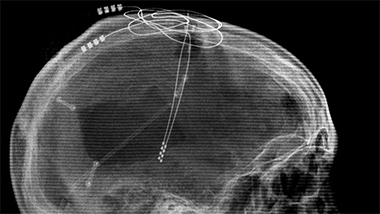
Well, according to an article in the Wall Street Journal, that is not actually true. In fact, the typical procedure is very quick and often only requires just an overnight stay in the hospital…
Neural implants, also called brain implants, are medical devices designed to be placed under the skull, on the surface of the brain. Often as small as an aspirin, implants use thin metal electrodes to “listen” to brain activity and in some cases to stimulate activity in the brain. Attuned to the activity between neurons, a neural implant can essentially “listen” to your brain activity and then “talk” directly to your brain.
If that prospect makes you queasy, you may be surprised to learn that the installation of a neural implant is relatively simple and fast. Under anesthesia, an incision is made in the scalp, a hole is drilled in the skull, and the device is placed on the surface of the brain. Diagnostic communication with the device can take place wirelessly. When it is not an outpatient procedure, patients typically require only an overnight stay at the hospital.
In the future, the minds of most people could potentially be connected to the Internet 24 hours a day. Imagine sending an email or answering your phone by just thinking about it. According to the New York Times, this is where we are eventually heading…
Soon, we might interact with our smartphones and computers simply by using our minds. In a couple of years, we could be turning on the lights at home just by thinking about it, or sending an e-mail from our smartphone without even pulling the device from our pocket. Farther into the future, your robot assistant will appear by your side with a glass of lemonade simply because it knows you are thirsty.
Researchers in Samsung’s Emerging Technology Lab are testing tablets that can be controlled by your brain, using a cap that resembles a ski hat studded with monitoring electrodes, the MIT Technology Review, the science and technology journal of the Massachusetts Institute of Technology, reported this month.
The technology, often called a brain computer interface, was conceived to enable people with paralysis and other disabilities to interact with computers or control robotic arms, all by simply thinking about such actions. Before long, these technologies could well be in consumer electronics, too.
So how far away is such technology?
According to a Computer World UK article, Intel believes that they will have Internet-connected brain implants in people’s heads by the year 2020…
By the year 2020, you won’t need a keyboard and mouse to control your computer, say Intel researchers. Instead, users will open documents and surf the web using nothing more than their brain waves.
Scientists at Intel’s research lab in Pittsburgh are working to find ways to read and harness human brain waves so they can be used to operate computers, television sets and cell phones. The brain waves would be harnessed with Intel-developed sensors implanted in people’s brains.
The scientists say the plan is not a scene from a sci-fi movie, Big Brother won’t be planting chips in your brain against your will. Researchers expect that consumers will want the freedom they will gain by using the implant.
And that would only be the tip of the iceberg. Futurist Ray Kurzweil is actually convinced that we will all eventually have hordes of nanobots running around our bodies monitoring our health and looking for disease…
‘Bridge two (is) the biotechnology revolution, where we can reprogram biology away from disease.
‘And that is not the end-all either.
‘Bridge three is to go beyond biology, to the nanotechnology revolution.
‘At that point we can have little robots, sometimes called nanobots, that augment your immune system.
‘We can create an immune system that recognizes all disease, and if a new disease emerged, it could be reprogrammed to deal with new pathogens.’
Such robots, according to Kurzweil, will help fight diseases, improve health and allow people to remain active for longer.
Are you ready for this kind of a future?
These technologies are being developed right now, and they will be enthusiastically adopted by a large segment of the general public.
At some point in the future, having a brain implant may be as common as it is to use a smart phone today.
And of course the mainstream media will be telling all of us how wonderful it is to have a brain implant. If you doubt this, just check out the following NBC News report where we are all told that we can expect to have microchip implants by the year 2017…
So are you ready for this brave new world?
Will you ever let them put a chip in your head?
Please share your thoughts by posting a comment below…
Related articles
- Brain implants- deep-brain stimulation (DBS) (smarteconomy.typepad.com)
- Brain Implants Will Connect People To Internet By 2020 (secretsofthefed.com)
Robotics revolution to replace most human workers in three generations; labor class to be systematically eliminated
|
by Mike Adams, the Health Ranger
Editor of NaturalNews.com Sunday, September 29, 2013
 (NaturalNews) As much as seventy percent of the human race will become obsolete within just three generations. Why? Because robotics technology is advancing at such a rapid pace that highly-capable humanoid robots with advanced vision recognition and motor coordination systems are going to take over most menial labor jobs.
Supporting this conclusion, a new study just released by Oxford scientists concludes that 47% of all jobs are “at risk” of being replaced by automation systems and robots in just one generation (roughly 20 years). But this is just the opening chapter of the robotics revolution that will rapidly make human labor all but obsolete. In my estimation, over the next three generations (about 75 years), we will see humanoid robots take over nearly all traditional labor roles in society, including manufacturing, agriculture, construction, firefighting, food service and even community policing. Most of the physical work done today by humans will be turned over to humanoid-shaped robots built much the same way we are: two arms, two legs, two eyes and roughly the size and shape of a 5′ 9″ man. This, in turn, will make virtually all human laborers obsolete. There will be no more need for people to pick crops, paint houses, clean windows, drive ambulances or even fight wars. Humanoid robots will take over every repetitious, dangerous, disgusting or boring task that humans currently tackle, from cleaning toilets and sweeping floors to driving taxis. A fascinating new book is coming out on this very topic in just a few days. It’s called Our Final Invention: Artificial Intelligence and the End of the Human Era by James Barrat. I’ve pre-ordered the book to make sure I get a copy when it’s released on October 1. Obviously, I haven’t read the book yet, but it sounds like it covers what I’m talking about right here: the end of an entire class of human beings as robots rise up and displace them. Why a future full of robots may not be as rosy as you thinkTo the typical naive citizen, all this talk about robots taking over menial labor jobs sounds futuristic and exciting. “We can all sit back and relax!” they’ll say. “The robots will do all the work for us!” Depopulation technologies, from mild to aggressive#1) Family planning – birth control, abortions and one-child policies that reduce population over time by limiting childbirth. This is seen by globalists as the most “humane” way to reduce global population because it does not require the actual killing of adult humans. Who will be allowed to live? Those who can createHere’s how the globalists think: In order to shape the future in a way that conserves resources while maximizing the technological progress of human civilization, all so-called “useless eaters” must be eliminated, as they waste far too much food, energy and land. The precious resources of planet Earth must be conserved for those few who have the intelligence to know what to do with it. How robots will multiply the great socioeconomic divideRobots will sharply divide the economic classes. Those who are replaced by robots will become jobless and homeless. Those whose lives are enriched by the benefit of the robots will become abundantly wealthy in the material quality of their lives. (Although, notably, robots will not make their spiritual lives any more meaningful, so don’t expect the robot revolution to equate to increased happiness.) How to make sure the future needs youIf you’re a cashier, a garbage collector, a drywall installer or any sort of ditch digger, the sobering truth of the matter is that the future doesn’t need you. And the system will find a way to eliminate you a few short years after your job is eliminated. After all, the world’s powerful decision makers can’t have hundreds of millions of useless eaters rioting in the streets interfering with progress, right? (That’s the way they think about it, anyway…) The humanoid robot rollout: a rough timeline• The first humanoid robots we’ll see will be soldiers. They will cost as much as $20 million each, and they will carry special sensors (infra-red vision) and equipment (emergency first aid) to track enemy combatants and help existing soldiers be more “effective” on the battlefield. Over time, this will transition to robotic soldiers becoming highly-efficient killing machines. Terminators, in other words, will soon carry rifles, kick in doors and toss grenades at “enemy combatants.” The key technologies still needed for humanoid robots to become feasibleRight now, robots do not exist that can perform all these functions. Today’s humanoid robots are lucky to be able to walk up a flight of stairs without falling over. Portable power is also extremely limiting right now and may be the primary challenge for the commercialization of humanoid robots. The bottom lineThe upshot of all this is that even though robotics is still a long way from achieving the level of sophistication required to see humanoid robots deployed in military, commercial and household applications, the day is coming that robots will replace most human laborers. |
Related articles
- Human Robot Getting Closer? (planet.infowars.com)
- Oxford Professors: Robots And Computers Could Take Half Our Jobs Within The Next 20 Years (freedomoutpost.com)
- What Undercover Boss and The Jetsons Tell Us About the Future of Jobs (slate.com)
Tough robo-challenge casts robots as rescuers
by Hal Hodson
11 September 2013

The DARPA Robotics Challenge will see humanoid robots competing to complete rescue missions, and could lead to robots better adapted to living alongside us
IN A side-street warehouse near the Massachusetts Institute of Technology, one of the world’s most advanced humanoid robots hangs limp from a steel gantry. Feet angled down like a ballet dancer, it is nearly 2 metres tall and as heavy as a sumo wrestler.
This is an Atlas robot, one of seven made by robotics company Boston Dynamics to take part in the DARPA Robotics Challenge, run by the US Defense Advanced Research Projects Agency. The world’s top specialists are competing to design a robot that can carry out emergency-response duties in disaster situations that are often too dangerous for humans, such as last year’s nuclear accident at Japan’s Fukushima Daiichi power plant. In December, Atlas and a motley crew of other robots will take to an obstacle course designed by DARPA in Pensacola, Florida. The robots will face eight challenges, including traversing uneven ground, getting into and driving a rescue vehicle, breaking down a wall and shutting off valves.
There is more than glory and $2 million prize money at stake: the competition could change the future of robotics research. “This is the grandest, the most exciting, and possibly the most important robotics project ever,” says Dennis Hong, leader of the team from Virginia Tech in Blacksburg, whose robot is called THOR.
Russ Tedrake, who leads the MIT team with Seth Teller, hands me a pair of lab glasses as we walk up to the Atlas. Its software brain is held in a nearby bank of PCs. “We put the robot out here because it’s dangerous,” says Tedrake. “We wanted the people working with it to take it seriously. It could shoot hydraulic fluid 30 feet across the room at any time. And it’s incredibly strong – it can punch through walls.”
Tedrake’s remit is the artificial intelligence which controls how the robot moves and grasps objects, while Teller oversees communications between the robot and its operators. Robots are pretty good at specific tasks, such as walking over to something and grabbing it, Tedrake says. “Where they fall down is planning what to do next. That’s where the human comes in.”
In MIT’s approach, a team of people monitors Atlas’s decisions and planned movements, approving those deemed correct and adjusting any that are unsuitable. For instance, Atlas will ask its handlers to identify objects it finds, something that is easy for a human but hard for machine-vision systems. If its leg gets stuck during a manoeuvre, the human observer in charge of locomotion can instruct Atlas to move the leg a little to clear an obstacle.
Such action will probably be required on one simple-sounding task that many of the teams think will in reality be the hardest – getting into a car. “We actually Fosbury-flopped into the car to get some kind of points,” says Tedrake, referring to his team’s performance in the first round of the challenge. That was the simulated Virtual Robotic Challenge in July, which earned the team one of the US government-funded Atlas robots to work with. “It’s an incredibly complicated set of movements.”
A team at NASA’s Jet Propulsion Laboratory in Pasadena, California, is feeling pretty confident that its robot can get into a car. Group leader Brett Kennedy describes RoboSimian as a cross between an orang-utan and a wolf spider – far less humanoid than Atlas. All its sensing equipment is inside the body and it is equally adept at grasping and moving with any of its four identical arms – each with seven joints. This gives it more options for navigating an obstacle course. Kennedy says they have talked about shimmying up a ladder section like a monkey, without using the steps. “It’s possible because we have this symmetry,” says Kennedy.
A team led by Tony Stentz at Carnegie Mellon University is also taking an odd spin on a humanoid robot. Their robot, called CHIMP, has legs that can fold up and double as treads when the robot needs to traverse rough terrain. Like RoboSimian, CHIMP is designed to be statically stable, so isn’t good on the move, but doesn’t need to use complicated algorithms to balance a bipedal gait. “This means we can position ourselves in one place and manipulate things easily,” says Stentz. “We feel good about the tasks that require us to operate tools and manipulate objects with our arms.”
The pressure is on. “This is a ridiculously difficult challenge,” says Hong. “There are going to be robots falling down, grey smoke, 30 minutes just standing there doing nothing.” Next year, in the second year of the challenge, there will be a marked improvement, he says.
“You’re going to see a lot of very impressive things from the teams – just like the autonomous car challenges.”
Hong is referring to the DARPA Urban Challenge, which sparked research that has since delivered Google’s self-driving car. Roboticists expect the challenge to improve humanoid robotics, too. “If a robot can do all of these eight tasks, it means that robots can be used for everything.”
Fukushima trigger
THE only non-US entrant in DARPA’s Robotics Challenge is Schaft, a robotics firm based in Tokyo. Schaft was spun off by two roboticists originally at the University of Tokyo, Yuto Nakanishi and Junichi Urata. They were driven to take part because they believe that humanoid robots should have been more useful in the response to the Fukushima nuclear meltdown.
Narito Suzuki, also at Schaft, says the strengths of their robot are the power it generates and its stability as it navigates. “Most life-sized humanoid robots generate one-tenth of the power that humans do, but ours generates the same amount,” he says. “Our robot doesn’t fall down even if it is kicked.”
Related articles
- Atlas Robots Released To DARPA Challenge Teams (33rdsquare.com)
- MIT performs the greatest unboxing ever: The Atlas Robot (geek.com)
- DARPA Robotics Challenge Atlas Robot unboxed by MIT (slashgear.com)
 Global Clarity